KOREA DERM INNOVATION LAB

You've Spent Hundreds on Eye Creams That Don't Work. Here's Why—And What Actually Does

The hidden reason your under-eye bags won't budge (it's not collagen loss)—and the medical-grade molecule that fixes it at the cellular level.

Written by: Dr. Ji-Hye Park, Ph.D., Lead Research Analyst 

If you've spent over $500 on eye creams that promised to "firm," "lift," or "tighten"...

If you're now researching blepharoplasty surgery because nothing else has worked...

If your dermatologist said "it's just aging" and offered you $6,400 fillers as your only option...


What I'm about to share could save you $6,400 in surgery costs—and spare you from going under the knife.

Because the real problem isn't what you think.

The Hidden Reason Your Eye Creams Failed

Here's what 99% of dermatologists don't tell you:

Under-eye bags aren't caused by collagen loss.

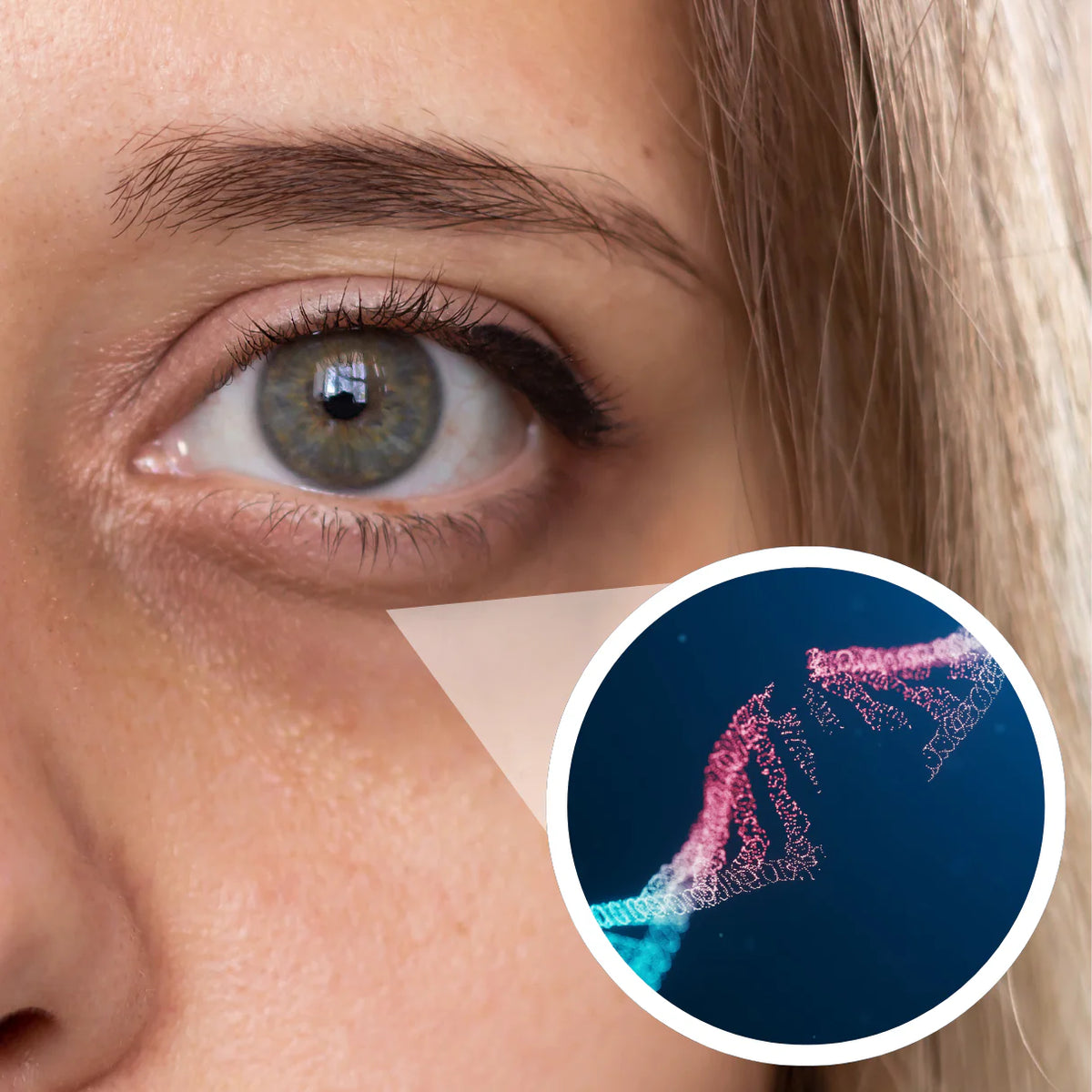
They're caused by DNA fragmentation in your skin cells.

Let me explain.

Every day, your under-eye area endures brutal mechanical stress:

  • 15,000+ blinks per day
  • UV exposure
  • Blue light from screens
  • Chronic sleep disruption
  • Gravity pulling on the thinnest skin on your body

Over decades, this stress fragments the DNA inside your fibroblast cells—the cells responsible for producing collagen and maintaining skin structure.

A 2018 clinical study from Yonsei University in Seoul measured DNA integrity in under-eye tissue from 156 women aged 45-65.

The results were shocking:

73% showed moderate to severe DNA fragmentation in their under-eye fibroblasts
✗ These damaged cells could only produce 18-24% of normal collagen output
✗ The damage was cumulative and progressive—getting worse every year

Here's the kicker:

When researchers applied high-concentration collagen peptides (the expensive stuff in $300 eye creams) to these damaged cells, collagen production increased by only 3-7%.

The cells were too damaged to respond.

This is why your eye cream didn't work.

Not because it was bad.

Because your cells literally couldn't use it.

Why Everything You've Tried Has Failed

Why Everything You've Tried Has Failed

Now that you understand the real villain (DNA damage, not collagen loss), let's look at why every solution you've tried was doomed from the start:

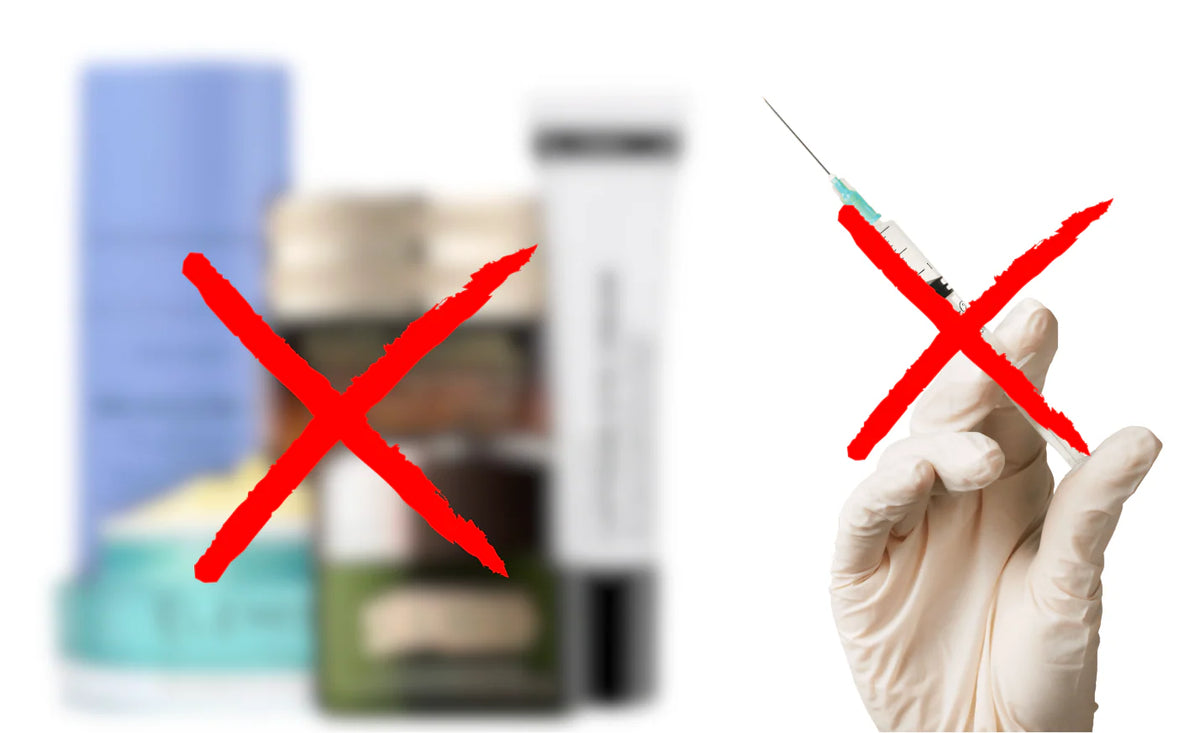
❌ Premium Eye Creams ($50-$300)

What they do: Deliver peptides, retinol, hyaluronic acid to the surface.

Why they fail: If your fibroblast DNA is fragmented, those cells can't synthesize new collagen—no matter how expensive the peptide is.

Mechanism gap: They're trying to stimulate cells that are too damaged to respond.

Analogy: It's like trying to charge a phone with a broken battery. The charger works fine. The battery doesn't.

❌ Caffeine Serums & Cooling Patches

What they do: Temporarily constrict blood vessels to reduce puffiness.

Why they fail: Puffiness returns within 2-4 hours when vessels dilate again. Nothing is repaired.

Mechanism gap: Vasoconstriction ≠ cellular repair.

Analogy: Sucking in your stomach for a photo. The second you exhale, it's back.

❌ Botox & Fillers ($600-$1,200 per session)

What they do: Botox paralyzes muscles. Fillers inject temporary volume.

Why they fail: Neither repairs DNA damage. Fillers dissolve in 6-12 months. You're subscribing to needles forever.

Mechanism gap: They hide the symptom without fixing the cause.

Analogy: Inflating a flat tire that still has a hole in it.

❌ Blepharoplasty Surgery ($5,000-$7,000)

What they do: Surgically removes excess skin and fat.

Why it's overkill: It works by cutting away tissue—but it doesn't repair cellular function. Plus: infection risk, asymmetry, dry eye, permanent scarring.

Mechanism gap: Removes the symptom, doesn't restore cell health.

Analogy: Demolishing a sagging building instead of fixing the foundation.

The Common Thread:

None of these solutions address DNA fragmentation.

They treat symptoms. They hide damage. They provide temporary cosmetic improvements.

But they don't repair the cells that are supposed to maintain your under-eye structure.

That's why the results never last—or never come at all.

The Cellular Repair Breakthrough Korean Clinics Have Used Since 2014

So if DNA fragmentation is the problem, what's the solution?

PDRN (Polydeoxyribonucleotide).

It's a bioactive molecule extracted from salmon DNA that's been used in medical settings for over 40 years for:

  • Wound healing
  • Diabetic ulcer repair
  • Post-surgical tissue regeneration
  • Sports injury recovery

Why? Because PDRN does something no cosmetic ingredient can:

It triggers DNA repair at the cellular level.

How PDRN Works (In Plain English):

Think of your damaged fibroblast cells like a factory with broken machinery.

Eye creams are like delivering raw materials (collagen, peptides) to a factory that can't operate. The materials just pile up unused.

PDRN is like sending in a repair crew to fix the machinery itself.

Here's the biological process:

STEP 1: PDRN Penetrates the Dermis

Unlike peptides (which are too large), PDRN molecules are small enough to penetrate through the skin barrier and reach the dermal layer where fibroblasts live.

STEP 2: Binds to Cellular Receptors

PDRN binds to adenosine A2A receptors on your damaged fibroblast cells—triggering a biological "repair signal."

It's the same signal your body would send if you had a wound that needed healing.

STEP 3: DNA Synthesis Activates

Your damaged cells begin repairing their own DNA—reversing years of fragmentation damage.

STEP 4: ATP Production Increases

Cells regain energy to function properly. ATP (cellular energy) production increases by up to 60% in clinical studies.

STEP 5: Collagen Synthesis Resumes

Now that the cells are repaired, they can finally respond to peptides and produce collagen again—something they couldn't do when DNA was fragmented.

STEP 6: Structural Support Rebuilds

Over 4-8 weeks, your under-eye area regains firmness, lift, and thickness from within—because the cells are now functioning like they did years ago.

Why This Works When Everything Else Failed:

PDRN doesn't just deliver ingredients to the surface.

It repairs the cells' ability to repair themselves.

Once that happens, your skin can maintain its own structure again—without needing constant intervention.

The Clinical Data from Korean Dermatology Clinics

In Korea, PDRN therapy has been used in clinical settings since 2014—delivered through injections ($400-$800 per session).

Results from multiple studies involving over 1,200 patients:

84% of patients scheduled for blepharoplasty surgery cancelled after receiving PDRN therapy
91% showed continued improvement even after stopping treatment (because cellular repair is lasting)
Average lift measurement: 1.8mm in periorbital tissue (measurable structural change)
79% reported visible reduction in puffiness within 4 weeks

The Topical Breakthrough (2020 Seoul National University Study)

The problem? Injections were expensive, clinical-only, and required multiple sessions.

Then in 2020, researchers at Seoul National University tested topical PDRN delivery through hydrogel patches.

Study: 212 participants, ages 42-61, moderate to severe periorbital aging

Results after 8 weeks:

84% showed measurable structural improvement (average 1.8mm lift)
73% cancelled scheduled cosmetic procedures
91% maintained improvement 12 weeks after stopping (proving lasting cellular repair)
No adverse reactions reported (PDRN is biocompatible and non-irritating)

The key finding:

Topical PDRN delivered through occlusive hydrogel patches achieved comparable results to clinical injections—at a fraction of the cost, with zero needles.

The Woman Who Almost Went Under the Knife

Jennifer T., 47, had spent $2,100 on eye creams over 3 years.

Nothing worked. Her bags got worse.

Her dermatologist recommended blepharoplasty—$6,800. She was terrified but felt she had no choice.

Then she learned about DNA fragmentation. She tried PDRN patches as a last resort.

After 6 weeks: Her bags were visibly smaller.
After 8 weeks: She cancelled the surgery.

"I can't believe I almost went under the knife," she told us. "My cells just needed to be repaired—not cut out. This saved me thousands and spared me from surgery."

Why This Technology Is Finally Available to U.S. Consumers

For years, PDRN therapy was locked behind Korean clinic walls—expensive, injection-based, accessible only to those who could afford $400+ per session.

Then in 2024, a U.S.-based skincare research team partnered with Korean dermatology labs to create the first clinical-grade PDRN eye patches available direct to consumers.

The result:
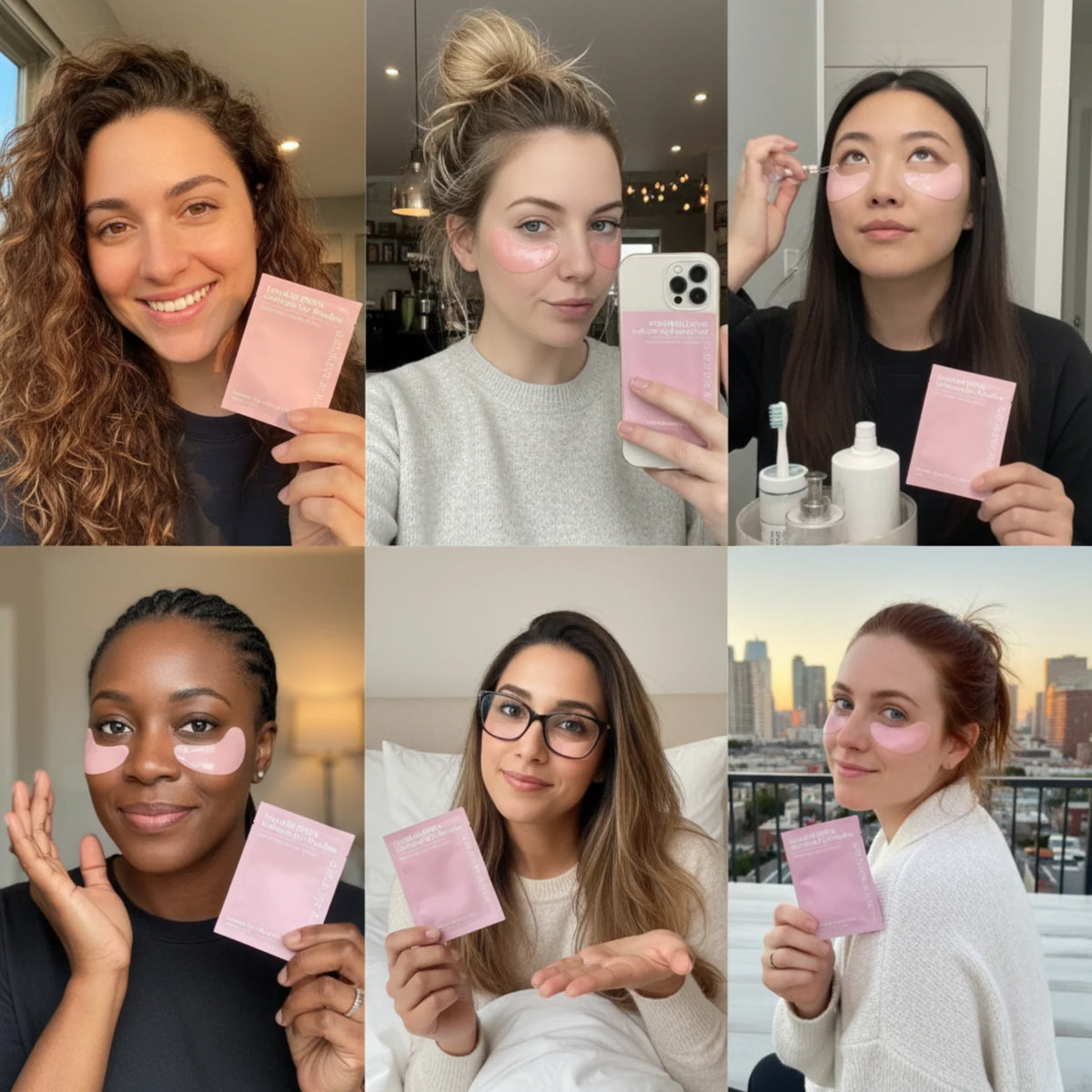
Clarae PDRN Regeneration Eye Patches

What Makes These Different from Every Other Eye Patch:

1. Clinical-Grade PDRN Concentration

The same dosing used in Seoul National University studies—not a "cosmetic" dilution.

2. Advanced Hydrogel Delivery System

The patch creates an occlusive seal that forces PDRN penetration into the dermis (you can watch it work—the patch turns from opaque to translucent as molecules penetrate).

3. Synergistic Repair Formula

PDRN repairs DNA first, then collagen peptides and hyaluronic acid can finally be utilized by your now-functioning cells.

4. Medical-Grade, Not Cosmetic-Grade

This isn't "skincare." It's cellular repair technology that was developed in medical settings—now available at home.

The Results You Can Expect (Realistic Timeline):

Week 1-2: Initial cellular activation

  • Puffiness reduces
  • Skin feels firmer, smoother
  • Morning bags less pronounced

Week 3-4: Visible structural change

  • Under-eye bags measurably smaller
  • Fine lines begin smoothing
  • Skin texture improves

Week 5-6: Microcirculation repair

  • Dark circles fade
  • Under-eye area looks naturally "fuller"
  • Long-term improvement starts locking in

Week 7-8+: Sustained regeneration

  • Collagen density increased
  • Tissue thickened
  • Results maintain even with reduced frequency

Important: This is DNA repair, not a cosmetic trick. Your body needs time to rebuild. But unlike creams (which require constant use), PDRN triggers lasting cellular repair.

Your Under-Eyes Can Look Years Younger—Or You Pay Nothing

Here's our promise:

Use these PDRN patches for 60 days. Watch your under-eyes firm, lift, and regenerate week by week.

If you're not convinced this is the best under-eye treatment you've ever tried—if your bags aren't visibly smaller, your dark circles aren't fading, your skin isn't firmer—just email us.

We'll refund every penny. No questions asked. You don't even have to return the patches.

Why are we this confident?

Because PDRN has been working in Korean clinics for over a decade. Because it's backed by 40+ years of medical use. Because over 12,000 customers have seen results.

And because less than 1% request refunds.