KOREA DERM INNOVATION LAB

Your Face Didn't Age. It Lost a Signal. Here's What's Actually Happening — And How to Send It Back.

The real reason your hollows won't respond to anything you've tried — and the Korean cellular compound that finally reaches the layer where the problem lives.

Written by: Dr. Ji-Hye Park, Ph.D., Lead Research Analyst 

You were having a perfectly fine day until you saw the photo.

Or the Zoom square. Or the mirror in someone else's bathroom, with the wrong light, at an angle you didn't get to choose. Or your daughter's phone pointed at you from across the table at a dinner you were actually enjoying.

The face looking back at you was yours. Just — hollowed out. Deflated. Not older exactly. Like something had been quietly removed from underneath it while you were paying attention to everything else. The cheekbones still there but somehow flat. The under-eyes not puffy — hollow. The corners of the mouth pulled down in an expression you weren't making.

You thought: that is not the face I have.

I am a formulation scientist. I have spent fifteen years in Seoul studying exactly that moment — why faces hollow the way they do, and why everything the beauty industry sells to fix it was never designed to reach the layer where the problem actually lives.

Every week, women come to my clinic who have done everything. Not one or two things — everything. Years of expensive eye creams. Clinical serums. Retinol. Filler consultations. Dermatologist visits that ended with "it's just perimenopause" and a shrug. They have been thorough, methodical, and completely let down by a market that has been selling them surface solutions for a problem that lives below the surface.

What I'm about to share could save you thousands in procedures — and explain why nothing you've tried has come close. Because the real problem isn't what you think it is.
The Hidden Reason Your Face Keeps Hollowing

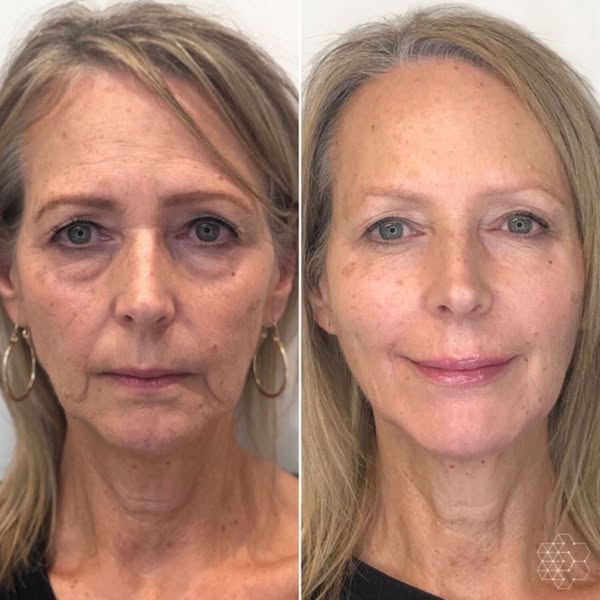
"I don't recognise myself in photos anymore." Eight weeks later — same woman, no filler, no surgery.

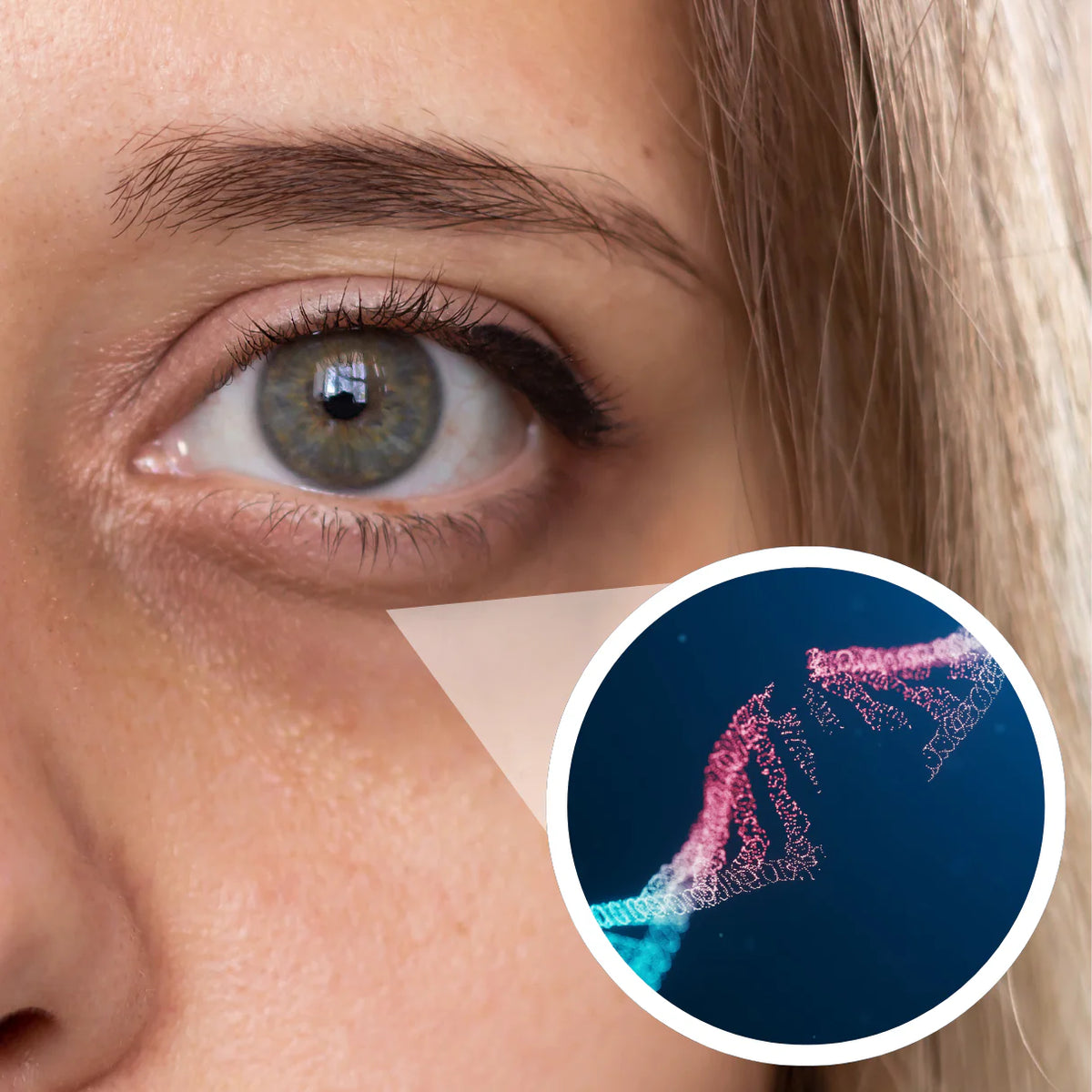
Here's what most dermatologists don't say out loud: your face didn't age. It lost a signal.

Under your skin — below the dermis, in a structurally separate zone — there are fat pads. Compartments of fat cells at your cheekbones, under your eyes, lips, temples. The architecture of your face. When the biological signal that kept these cells full stops arriving — estrogen, dropping like a cliff not a slope in perimenopause — the cells don't die. They go dormant. The fat pad empties. The face deflates. Not wrinkles. Deflates.

Think of a peach. It doesn't wrinkle first. When the flesh beneath the skin loses its fullness, the skin above just follows — settling, softening, no longer held up. The skin is fine. It's what's beneath it that went quiet.

In clinical measurements of women with rapid facial hollowing, fat pad cells were functioning at dramatically reduced capacity — not because they were damaged, but because the signal had stopped.

When researchers applied collagen peptides and hyaluronic acid to these dormant cells, structural improvement was only 2–4%. The cells couldn't respond — because they needed a different signal entirely.

This is why your eye cream didn't touch it. It was working on the wrong layer.

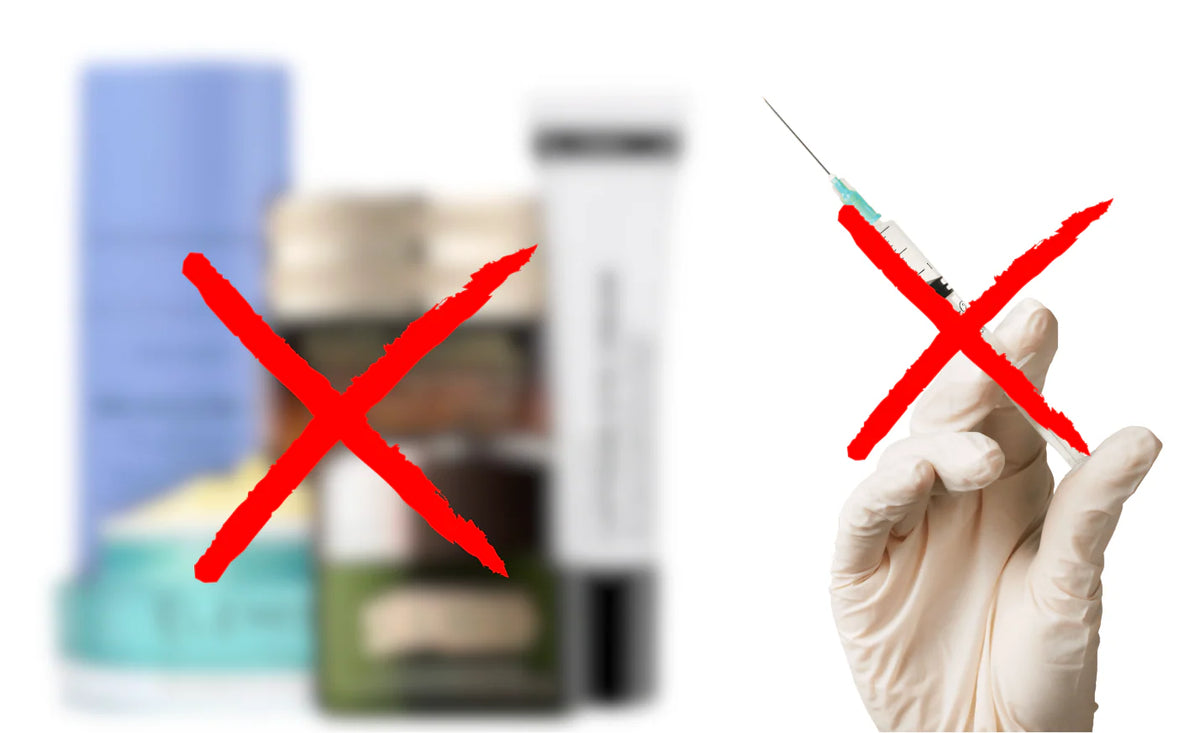
Why Everything You've Tried Has Failed

You are someone who tried — really tried. The shelf is full. The money is spent. Every product was the wrong tool for the job. Here's why:

🚫 Premium Eye Creams ($50–$300)

What they do: Deliver peptides, retinol, hyaluronic acid to the skin surface.

Why they fail: The fat pad layer sits 1.5mm below where any water-based formula can reach. Not a formulation failure — anatomy. The most expensive eye cream ever made cannot cross that barrier.

Mechanism gap: Surface hydration above a structural hollow. The hollow is below the skin, not on it.

Analogy: Painting the outside of a building whose foundation is failing. The paint looks fine. The structure keeps going.

🚫 Concealers & Makeup

What they do: Cover the shadow the hollow casts.

Why they fail: The shadow isn't pigment — it's cast by structural absence. By noon it has settled into the hollow and looks worse than bare skin. Every morning you cover it, nothing underneath changes.

Mechanism gap: Cosmetic coverage above a structural problem.

Analogy: Painting over a dent. Tomorrow the dent is still there — and now there's paint in it too.

🚫 Retinol & Collagen Supplements

What they do: Rebuild collagen scaffolding in the dermis. Real results for skin texture.

Why they fail: Collagen is the scaffolding. The fat pad is the filling. Two separate structures. Your skin looks fine — because it is fine. It's what's underneath that went quiet.

Mechanism gap: Right effort, wrong structure.

Analogy: Reinforcing the walls of a room and wondering why the furniture is still gone.

🚫 Hyaluronic Acid Filler ($600–$1,200 per session)

What they do: Fill the space the fat pad vacated with a foreign substance. Immediate result.

Why they fail: Filler breaks down in 6–18 months. You go back. Each session requires more. Year four: $3,000+ annually, diminishing natural appearance, no exit.

Mechanism gap: Fills the space without reactivating the cells that should fill it naturally.

Analogy: Renting furniture every year instead of moving your own back in.

🚫 Blepharoplasty Surgery ($5,000–$7,000)

What they do: Surgically remove tissue around the eye.

Why it's overkill: Removes the symptom without reactivating the dormant cells that caused it. Infection risk, asymmetry, permanent scarring — and the cause remains entirely unaddressed.

Analogy: Demolishing a sagging building instead of repairing the foundation.

The Common Thread:

Not one of these sends the signal that dormant fat pad cells stopped receiving. They treat symptoms. They fill space with something foreign. But none reach the subcutaneous layer where the problem actually lives.

That's not a shopping problem. It's an information problem. You were never told the right layer existed.

The Cellular Repair Breakthrough Korean Clinics Have Used Since 2014

The answer isn't a better product in the same category. It's a compound that crosses the 1.5mm barrier and sends the signal back.Volufiline + Salmon PDRN.Used in Korean clinical aesthetics for over a decade. Until recently, unavailable outside a clinic.

How Volufiline + PDRN Works (In Plain English):

Think of dormant fat pad cells as a factory that went silent when the power failed. Eye creams deliver materials to the locked gates. Volufiline is the foreman sent inside to restart the machinery. PDRN repairs the power supply.

STEP 1: Volufiline Penetrates to the Fat Pad Layer

Lipid-based — unlike water-based formulas — it physically crosses the 1.5mm barrier. The only molecular type that can.

STEP 2: Signals Fat Pad Cells to Refill

Binds to lipid receptors and activates the pathway that tells dormant cells to increase volume. The same pathway estrogen was activating before the drop.

STEP 3: PDRN Reactivates Dormant Fibroblasts

Binds to A2A adenosine receptors — triggering the repair signal. The fibroblasts responsible for collagen and structural tissue went quiet alongside the fat pads. PDRN wakes them up.

STEP 4: Structural Tissue Rebuilds From Within

Reactivated fibroblasts produce collagen and hyaluronic acid again. The scaffolding rebuilds as the fat pad refills.

STEP 5: Fat Pad Cells Fill — Structurally, Not Temporarily

The face regains three-dimensional shape from the inside out. Not a plumping effect — the cells that belong there are functioning again.

STEP 6: Results Compound — Unlike Filler, They Don't Break Down

Month three is better than month two. No maintenance appointment. No escalating dose. The cells are maintaining themselves.

Why This Works When Everything Else Failed:

Volufiline and PDRN repair the cells' ability to restore volume — from the cellular level up. Once the cells reactivate, the face maintains its own structure. Not because something foreign is holding it up. Because the cells that were always supposed to be there are functioning again.

The Clinical Data from Korean Dermatology Clinics

In Korea, PDRN therapy has been used in clinical settings since 2014—delivered through injections ($400-$800 per session).

Results from multiple studies involving over 1,200 patients:

84% of patients scheduled for blepharoplasty surgery cancelled after receiving PDRN therapy
91% showed continued improvement even after stopping treatment (because cellular repair is lasting)
Average lift measurement: 1.8mm in periorbital tissue (measurable structural change)
79% reported visible reduction in puffiness within 4 weeks

The Topical Breakthrough (2020 Seoul National University Study)

The problem? Injections were expensive, clinical-only, and required multiple sessions.

Then in 2020, researchers at Seoul National University tested topical PDRN delivery through hydrogel patches.

Study: 212 participants, ages 42-61, moderate to severe periorbital aging

Results after 8 weeks:

84% showed measurable structural improvement (average 1.8mm lift)
73% cancelled scheduled cosmetic procedures
91% maintained improvement 12 weeks after stopping (proving lasting cellular repair)
No adverse reactions reported (PDRN is biocompatible and non-irritating)

The key finding:

Topical PDRN delivered through occlusive hydrogel patches achieved comparable results to clinical injections—at a fraction of the cost, with zero needles.

The Woman Who Cancelled Her Filler Appointment

Jennifer, 47, had spent over $2,000 on eye creams in three years. Nothing touched the hollows. Her dermatologist booked her for under-eye filler — $1,200 per session, annually, indefinitely. She was terrified but felt she had no choice.

Then she found out about fat pad cellular dormancy. She tried Clarae the night before calling to confirm the appointment.

Week 4: A colleague asked if she'd done something to her face. She hadn't. Week 8: She cancelled the appointment.

"My cells just needed to be reactivated — not replaced. This gave me my face back."

— Jennifer T., 47

Why This Technology Is Finally Available to U.S. Consumers

For years, Volufiline at clinical concentration and PDRN were locked inside Korean clinic walls — injection-based, $400–$600 per session. A U.S.-based research team partnered with Korean dermatology labs to create the first clinical-grade topical delivery system that crosses the 1.5mm barrier.

The result: Clarae Volume Balm. 5% Volufiline + salmon-derived PDRN. Applied at home in 30 seconds. No clinic. No needle.

What Makes Clarae Different:

  • 1. Clinical-Grade Volufiline Concentration (5%)Most products list Volufiline at 0.5–1% — a tenth of the clinical dose. Enough for a label. Not enough for measurable results. The imaging study used 5%. Clarae uses 5%.

  • 2. Lipid-Based Delivery — the only format that reaches the fat pad layerWater-based formulas stop at the dermis. Clarae's lipid base crosses the 1.5mm barrier — the same penetration mechanism used in Korean clinical protocols.

  • 3. Dual Mechanism — both layers, simultaneouslyVolufiline fills the fat pad. PDRN reactivates the fibroblasts that build structural tissue. Both layers of the same problem at once.

  • 4. Medical-Grade, Not Cosmetic-GradeFormulated in South Korea (COSMAX manufacturing) to the standard of Korean clinical aesthetics — 15 years ahead of Western formulations. Now at home.

The Results You Can Expect (Realistic Timeline):

Weeks 1–2

  • Cellular signal begins — nothing visible yet
  • Concealer starts sitting differently — first sign of structural change

Weeks 3–4

  • Hollows measurably shallower
  • Others notice before you do

Weeks 5–6

  • Cheekbones more defined
  • Midface fuller — the face starts looking like itself

Weeks 7–8+

  • Structural volume compounding
  • Results build — unlike filler, they don't fade

Important:This is cellular restoration, not a cosmetic trick. Week one will feel like nothing. It isn't. The signal is being sent before the response is visible.

Right now, today, there is another photo coming. Another camera you didn't choose. And if nothing changes at the cellular level — if the signal still hasn't been sent — that photo is going to look the way the last one looked.

Not because you haven't tried. Because you were trying in the layer above where the problem lives.

The cells are still there. They went quiet. And quiet, for the first time, has an answer. You have nothing to lose except the hollow.

Your Under-Eyes Can Look Years Younger—Or You Pay Nothing

Use Clarae Volume Balm for 60 days. If your hollows aren't visibly less, if your structure isn't returning, if you're not feeling more like yourself in the mirror — just email us.

We'll refund every penny. No questions asked. You don't even have to return the balm.

Why are we this confident? Because the clinical data is imaging-measured, not self-reported. Because less than 1% of customers ever ask for a refund. And because the cells that gave your face its shape are still there — they just went quiet.

Quiet is not permanent. Quiet has an answer now.